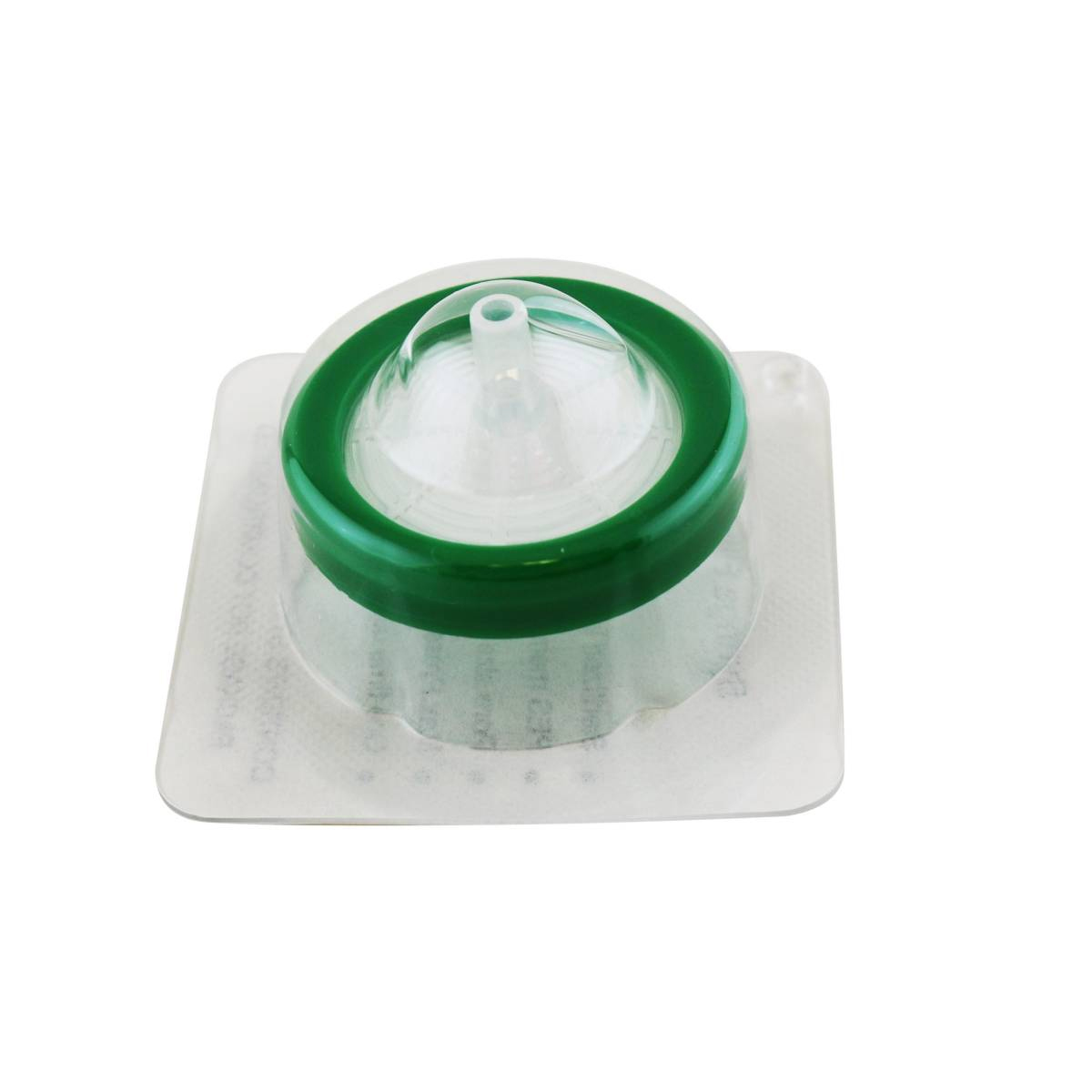
Types of Sterile Syringe Filters
Choosing the right filter often depends on the material of the membrane and its compatibility with the liquid being filtered. Below are the most commonly used sterile syringe filter types:
Nylon Sterile Syringe Filters
Nylon filters are versatile, hydrophilic, and resistant to many solvents. They’re particularly useful in HPLC sample preparation, microbiological analysis, and aqueous solutions.
PVDF Sterile Syringe Filters
PVDF (Polyvinylidene Fluoride) filters are popular for their low protein binding. They’re excellent for filtering biological samples where protein recovery is critical, such as in enzyme or antibody research.
PTFE Sterile Syringe Filters
PTFE (Polytetrafluoroethylene) filters are highly resistant to chemicals and solvents, making them ideal for aggressive liquids and organic solvents. They are hydrophobic, which means they repel water, but can be pre-wetted with alcohol if used for aqueous samples.
PES Sterile Syringe Filters
PES (Polyethersulfone) filters are hydrophilic with very low extractables, making them suitable for cell culture media, serum, and other sensitive biological solutions.
Mixed Cellulose Ester (MCE) Syringe Filters
MCE filters provide excellent flow rates and are commonly used for microbiological and water testing applications.
Applications of Sterile Syringe Filters
Sterile syringe filters serve across multiple industries and scientific disciplines:
Use in Pharmaceuticals
Pharmaceutical labs rely on these filters to maintain sterility in injectable drugs, vaccine production, and quality control testing.
Clinical and Medical Applications
Hospitals and diagnostic centers use sterile syringe filters in blood analysis, microbiology, and patient sample preparation.
Biotechnology and Life Sciences
In molecular biology, sterile filters ensure that DNA, RNA, and protein samples remain uncontaminated, preserving accuracy in sequencing and cloning experiments.
Environmental and Water Testing
Scientists filter water samples through sterile syringe filters to detect microbial contamination or pollutants.
Food and Beverage Industry
Ensuring product safety is critical. Sterile filters are used to test milk, juices, and bottled water for bacteria and impurities.
How to Choose the Right Sterile Syringe Filter
When selecting a filter, consider these factors:
-
Pore Size Selection – Use 0.22 µm filters for sterilization and 0.45 µm filters for particle removal.
-
Filter Material Considerations – Match the filter membrane to your solution’s chemical compatibility.
-
Volume and Flow Rate Requirements – Choose larger filter diameters for high-volume filtration.
-
Chemical Compatibility – Always verify that the solvent or sample doesn’t degrade the filter membrane.
Benefits of Sterile Syringe Filters
-
Enhanced Sample Purity – Removes bacteria, fungi, and particulates.
-
Protection of Equipment – Prevents clogging in chromatography systems and analytical instruments.
-
Improved Accuracy – Reduces variability in test results, making data more reliable.
Step-by-Step Guide: How to Use Sterile Syringe Filters
-
Preparing the Filter – Open sterile packaging carefully.
-
Attaching to the Syringe – Connect the filter to the syringe tip securely.
-
Filtration Procedure – Slowly push the solution through the filter without applying excessive force.
-
Disposal and Safety Practices – Discard the filter as biohazardous waste after single use.
Common Mistakes to Avoid
-
Incorrect Pore Size – Using too large a pore size may allow microorganisms to pass.
-
Non-Compatible Solvents – Some membranes dissolve in strong solvents, leading to contamination.
-
Overloading the Filter – Forcing too much solution reduces efficiency and may rupture the membrane.
Sterile vs. Non-Sterile Syringe Filters
-
Sterile Filters – Pre-sterilized, suitable for sensitive applications such as pharmaceuticals and clinical testing.
-
Non-Sterile Filters – Used for general laboratory filtration where sterility is not required.
Quality Standards and Certifications
Sterile syringe filters comply with strict quality controls:
-
ISO Certified – Ensures standardized quality and sterility.
-
FDA Guidelines – Essential for pharmaceutical and clinical applications.
-
Good Laboratory Practices (GLP) – Promotes reproducibility and reliability in results.
Top Manufacturers and Suppliers
Some globally recognized brands include MilliporeSigma, Sartorius, Pall Corporation, and Whatman. Affordable suppliers also provide high-quality sterile syringe filters for small laboratories and startups.
FAQs About Sterile Syringe Filters
Q1: What is the main purpose of a sterile syringe filter?
A: To remove microorganisms and particulates from solutions while maintaining sterility.
Q2: Can sterile syringe filters be reused?
A: No. They are single-use devices to prevent contamination.
Q3: Which pore size should I choose for sterilization?
A: A 0.22 µm pore size is commonly used for sterilization.
Q4: Are sterile syringe filters safe for proteins and enzymes?
A: Yes, PES and PVDF filters are best for protein recovery.
Q5: What industries rely most on sterile syringe filters?
A: Pharmaceuticals, biotechnology, clinical diagnostics, food safety, and environmental testing.
Q6: How do I dispose of used sterile syringe filters?
A: Treat them as biohazard waste and follow your lab’s disposal guidelines.
Conclusion:
Sterile syringe filters are indispensable tools in laboratories, clinics, and industries that demand the highest levels of purity and accuracy. By preventing contamination, protecting instruments, and ensuring reliable results, they form the backbone of safe and effective scientific research. Choosing the right filter-based on pore size, membrane material, and application-is essential for achieving consistent results.
For professionals and researchers, investing in high-quality sterile syringe filters not only improves efficiency but also ensures compliance with strict safety and quality standards.