
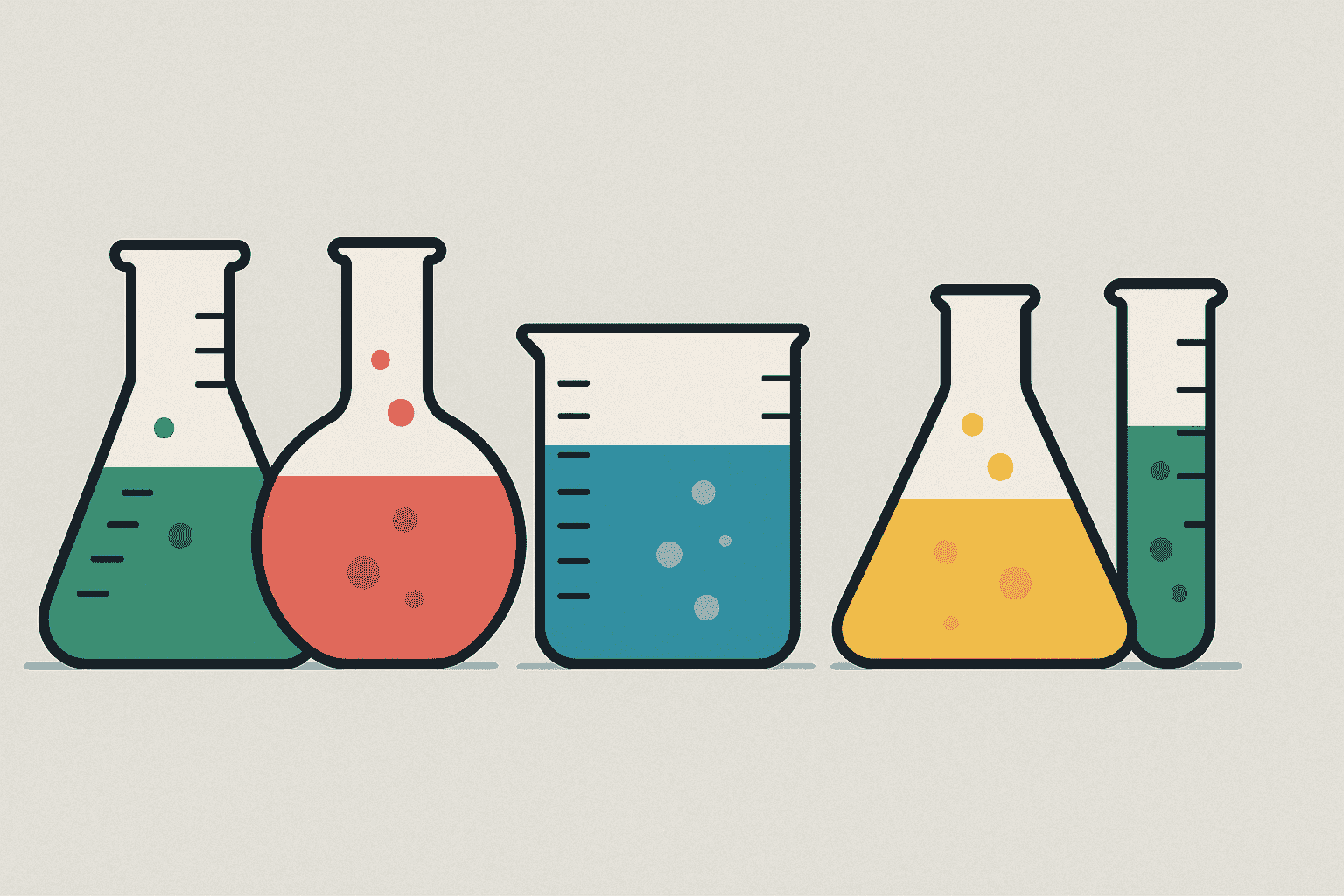
Introduction to Essential Lab Glassware
The world of chemistry is built on curiosity, observation, and precision. Whether you're carrying out a basic titration or preparing a standard solution, the Top 10 Lab Glassware Items Used in Chemistry Practicals play a vital role in helping students conduct experiments safely and accurately. These tools have been refined over decades to ensure that every measurement, reaction, and observation is performed with the highest level of reliability.
Laboratories depend heavily on high-quality glassware because it withstands temperature changes, resists chemical corrosion, and maintains accuracy across diverse experiments. From beakers to burettes, each piece of glassware has a unique purpose and contributes to the smooth execution of scientific procedures.
Why Lab Glassware Matters in Scientific Experiments
Accuracy and Precision in Measurements
Chemistry is a science of exactness. Many experiments rely on precise measurements to ensure correct results. Glassware such as volumetric flasks, burettes, and pipettes are calibrated to deliver highly accurate volumes, reducing errors and improving reliability in practical labs.
Safety in Handling Chemicals
Using appropriate glassware also helps maintain safety standards. Heat-resistant borosilicate glass prevents breakage during heating, while specialized containers like conical flasks minimize spills during mixing. High-quality glassware supports both functionality and safety during complex chemical procedures.
Top 10 Lab Glassware Items Used in Chemistry Practicals
1. Beakers
Beakers are one of the most widely used tools in any chemistry laboratory. These cylindrical containers, usually made of borosilicate glass, come with a flat bottom and a spout for easy pouring.
Common Uses of Beakers in the Laboratory
-
Mixing solutions
-
Heating liquids
-
Holding chemicals for observation
Types of Beakers
-
Tall form beakers
-
Low form (standard) beakers
-
Graduated beakers with measurement markings
2. Conical Flasks (Erlenmeyer Flasks)
Conical flasks feature a flat bottom, a conical body, and a narrow neck—ideal for swirling liquids without spilling.
Applications
-
Titration experiments
-
Mixing chemicals safely
-
Storing or heating solutions
Benefits
-
Reduced risk of spills
-
Heat-resistant design
-
Works well with stoppers for temporary storage
3. Volumetric Flasks
Volumetric flasks are essential for preparing precise solutions in analytical chemistry.
Importance
A volumetric flask has a long neck with a single calibration mark, ensuring the solution inside reaches an exact and accurate volume.
Capacity Variations
Available in: 25 mL, 50 mL, 100 mL, 250 mL, 500 mL, 1 L.
4. Test Tubes
Test tubes are small cylindrical tubes used for heating, mixing, and holding small samples.
Uses
-
Conducting small-scale reactions
-
Heating substances over a flame
-
Observing color changes
Materials
-
Borosilicate glass
-
Plastic (for classroom demonstrations)
5. Burettes
A burette is a long, graduated glass tube with a tap at the bottom. It's crucial in titration experiments.
Precision Role
Burettes help deliver liquids drop by drop, allowing highly accurate measurements.
Reading a Burette
Always read the meniscus at eye level for correct values.
6. Pipettes (Volumetric & Graduated)
Pipettes are used for transferring precise volumes of liquid.
Uses
-
Measuring small volumes accurately
-
Preparing accurate dilutions
Safety Tips
-
Never pipette by mouth
-
Use pipette fillers or pumps
7. Measuring Cylinders (Graduated Cylinders)
Graduated cylinders allow users to measure liquid volumes more accurately than beakers.
Advantages
-
Clear graduations for reading
-
Available in glass and plastic
Glass vs. Plastic
Glass offers higher accuracy, while plastic provides better durability.
8. Watch Glasses
Watch glasses are shallow, concave dishes used for observing small quantities of substances.
Applications
-
Evaporation
-
Holding small samples
-
Covering beakers
9. Funnels
Funnels help in transferring liquids or solids without spilling.
Types
-
Simple laboratory funnels
-
Separating funnels for immiscible liquids
10. Round-Bottom Flasks
These flasks are designed to distribute heat evenly, making them ideal for heating chemicals.
Uses
-
Distillation
-
Reflux reactions
-
Organic synthesis
How to Clean and Maintain Lab Glassware
Proper care extends the lifespan of lab glassware and improves experiment accuracy.
Washing Techniques
-
Use mild detergents
-
Rinse with distilled water
-
Allow glassware to air dry
Storage Tips
-
Store upright
-
Avoid stacking fragile items
Safety Precautions When Using Glassware
Preventing Breakage
-
Handle with dry hands
-
Avoid rapid temperature changes
Disposal
Dispose of shattered glassware in designated sharps containers only.
Frequently Asked Questions
1. Why is borosilicate glass used in laboratories?
It can withstand extreme heat and chemical reactions without breaking.
2. Which glassware is most accurate for measuring liquids?
Volumetric flasks, burettes, and pipettes.
3. Can you heat all types of glassware?
Only heat-resistant glassware like Pyrex should be heated.
4. Why are conical flasks used in titration?
Their narrow neck allows swirling without spilling.
5. What’s the difference between a beaker and a measuring cylinder?
Beakers are for holding and mixing; cylinders are for accurate measurement.
6. How often should lab glassware be cleaned?
After every experiment to avoid contamination.
Conclusion
The Top 10 Lab Glassware Items Used in Chemistry Practicals form the backbone of laboratory learning. Each piece serves a distinct purpose, helping students perform experiments safely, accurately, and effectively. By understanding their uses and practicing proper handling, learners can build strong scientific skills that support future studies.