
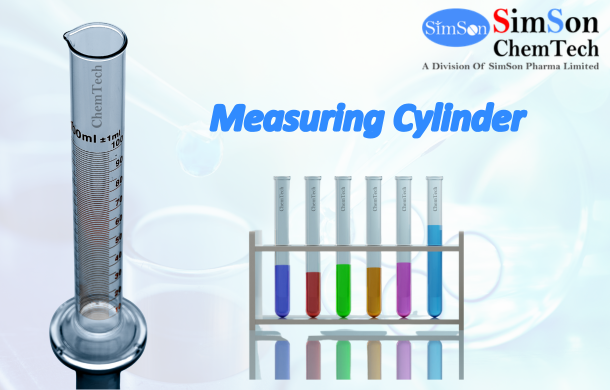
In every laboratory, precision is key, especially when it comes to measuring liquids. Among the wide variety of lab glassware, the measuring cylinder-also known as a graduated cylinder-is one of the most reliable and commonly used tools for volume measurement.
In this blog, we’ll explore what a measuring cylinder is, its types, uses, how to read it accurately, and how to maintain it, making it an indispensable part of any lab environment.
What is a Measuring Cylinder?
A measuring cylinder is a tall, narrow, cylindrical container with graduation marks along its length. It is used for accurately measuring liquid volumes in laboratories. The design allows for easy reading and minimal spillage, which is crucial for scientific accuracy.
Unlike beakers or flasks, which are often used for mixing or holding liquids, measuring cylinders are specifically designed for precise volume measurement.
Types of Measuring Cylinders
There are several types of measuring cylinders, based on material, size, and accuracy level:
1. Glass Measuring Cylinder
-
Made from borosilicate or soda lime glass
-
Heat- and chemical-resistant
-
Offers clear visibility of liquids and meniscus
2. Plastic Measuring Cylinder
-
Made from polypropylene (PP) or polymethylpentene (PMP)
-
Lightweight and durable
-
Suitable for educational or field labs
-
More impact-resistant but less heat-tolerant than glass
3. Class A vs Class B Cylinders
-
Class A: Higher precision, certified for analytical use
-
Class B: General laboratory use with moderate accuracy
4. Single Scale vs Double Scale
-
Single Scale: Reads volume in one direction (e.g., bottom to top)
-
Double Scale: Can be read from either side, improving convenience
Common Sizes and Graduation
Measuring cylinders are available in multiple volume capacities:
|
Capacity |
Graduation Interval |
|
10 ml |
0.2 ml |
|
25 ml |
0.5 ml |
|
50 ml |
1 ml |
|
100 ml |
1 ml |
|
250 ml |
2 ml |
|
500 ml |
5 ml |
|
1000 ml (1L) |
10 ml |
|
2000 ml(2L) |
20 ml |
The finer the graduation, the higher the measurement precision.
Uses of Measuring Cylinder in Laboratory
Measuring cylinders are essential across a wide range of scientific disciplines:
-
Chemistry Labs: For preparing solutions and titration setups
-
Biology Labs: Measuring culture media and biological fluids
-
Pharmaceutical Industry: Accurate dosing and mixing of compounds
-
Food & Beverage Testing: Quantifying liquids like oils, juices, or extracts
-
Educational Labs: Teaching accurate volume measurement techniques
How to Use a Measuring Cylinder Accurately
To ensure precise volume measurement, follow these steps:
-
Place the cylinder on a flat, level surface.
-
Pour the liquid slowly to avoid foaming or splashing.
-
Read the bottom of the meniscus (the curved surface of the liquid).
-
Keep your eye level with the liquid surface to avoid parallax error.
-
Use a funnel if needed to pour liquids safely.
Pro Tip: Always clean and dry the cylinder before measuring a new liquid to avoid contamination.
Maintenance and Cleaning Tips
Proper care extends the life of your measuring cylinders and ensures consistent results:
-
Clean immediately after use with lab detergent and warm water
-
Avoid abrasive brushes that may scratch graduation marks
-
Rinse with distilled water to avoid mineral deposits
-
Store upright in a dust-free cabinet to maintain cleanliness
-
Inspect regularly for cracks, chips, or fading marks
Safety Guidelines When Handling Measuring Cylinders
-
Avoid sudden temperature changes to prevent glass breakage
-
Do not heat plastic cylinders
-
Handle large cylinders with two hands
-
Dispose of broken or chipped cylinders safely
-
Wear protective gloves and goggles when handling corrosive substances
Simson Chemtech: Trusted Supplier of Measuring Cylinders in India
Looking for high-quality measuring cylinders at affordable prices?
Simson Chemtech is your reliable manufacturer and supplier of laboratory glassware across India.
We offer:
-
Borosilicate glass measuring cylinders (Class A and B)
-
Plastic graduated cylinders in various sizes
-
Customizable options for specific industrial and academic needs
Our products are chemically resistant, ISO-certified, and ideal for professional and educational laboratories.
Conclusion: Precision Starts with the Right Tools
Whether you’re conducting a complex chemical reaction or a basic volume measurement in a classroom, the measuring cylinder is an essential tool for accuracy and safety. Choosing the right type, using it correctly, and maintaining it properly can greatly improve your experimental results.
Frequently Asked Questions (FAQs)
1. What is a measuring cylinder used for in a laboratory?
A measuring cylinder is used to accurately measure the volume of liquids in scientific experiments, chemical processes, and educational labs.
2. How do you read a measuring cylinder correctly?
Place the cylinder on a flat surface and read the liquid level at the bottom of the meniscus (the curved surface) at eye level for precise measurement.
3. What are the different types of measuring cylinders?
Measuring cylinders come in various materials (glass, plastic), shapes (graduated, mixing), and sizes (10 mL to 2,000 mL), with options like Class A or Class B for precision levels.
4. What is the difference between a beaker and a measuring cylinder?
A beaker is mainly for mixing and rough volume estimation, while a measuring cylinder is designed for accurate volume measurement with precise graduations.
5. Which material is best for measuring cylinders: glass or plastic?
Glass cylinders offer higher chemical and thermal resistance, while plastic cylinders are lightweight, shatterproof, and ideal for routine or field use.
6. How accurate is a measuring cylinder compared to other lab equipment?
Measuring cylinders are more accurate than beakers but less precise than volumetric flasks or burettes, making them ideal for general volume measurements.
7. Can measuring cylinders be autoclaved?
Yes, borosilicate glass and some high-grade plastic measuring cylinders can be autoclaved, but always check the manufacturer’s specifications for heat resistance.
8. How to maintain and clean a laboratory measuring cylinder?
Clean immediately after use with mild detergent and warm water. Rinse with distilled water and air dry. Avoid using abrasives that can wear off graduation marks.
9. What are the common sizes available for measuring cylinders?
Common sizes include 10 mL, 25 mL, 50 mL, 100 mL, 250 mL, 500 mL, 1000 mL, and 2000 mL, depending on the laboratory’s measuring needs.
10. Why is a Class A measuring cylinder preferred for precision work?
Class A measuring cylinders offer tighter tolerance and calibration, ensuring high accuracy, and are used in analytical labs where precision is critical.