
Introduction to Volumetric Laboratory Tools
In every chemistry or biology lab, accurate liquid measurement is essential. Whether students perform titrations or scientists analyze samples, choosing the right tool ensures valid and repeatable results. Among the most widely used instruments are the burette and pipette. Understanding Burette vs Pipette - Key Differences and Applications helps you select the correct equipment for precision-dependent tasks.
What Is a Burette?
Structure and Design
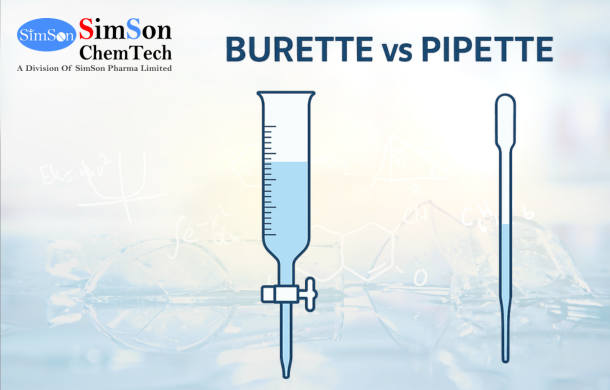
A burette is a long, cylindrical, calibrated glass tube with a stopcock at the bottom. Its markings allow scientists to measure liquids accurately down to 0.1 mL. The transparent structure helps users monitor the meniscus clearly.
How a Burette Works
To use a burette, a liquid is poured from the top and released drop by drop through the stopcock. This gives excellent control over the liquid volume delivered.
Common Uses in Titration
Burettes are primarily used for titrations, where chemicals react to determine concentration. Because titrations require controlled addition of a reagent, the burette’s dropwise precision is crucial.
What Is a Pipette?
Types of Pipettes
Volumetric Pipettes
These deliver one fixed volume accurately, ideal for solution preparation.
Micropipettes
Used in biology and molecular labs, these measure microliters for DNA, enzymes, and protein analysis.
Graduated Pipettes
These measure various liquid volumes but with lower precision than volumetric pipettes.
How a Pipette Works
A pipette works by creating suction to draw liquid up to a calibration mark. Then, the liquid is released into another container. Some use squeeze bulbs, while micropipettes rely on mechanical plungers.
Burette vs Pipette - Key Differences and Applications
Understanding the differences between these tools helps researchers achieve accurate measurements.
Functional Differences
A burette delivers liquid gradually, making it perfect for titration. A pipette transfers a set amount quickly, making it ideal for preparing solutions or adding reagents.
Accuracy and Precision Differences
Both tools are highly accurate, but pipettes often deliver smaller, more controlled volumes. Burettes, however, excel in delivering incremental volumes.
Application-Based Comparison
|
Feature |
Burette |
Pipette |
|
Best Use |
Titration |
Liquid transfer |
|
Volume Range |
Large volumes |
Small to medium volumes |
|
Control |
High (dropwise) |
Moderate |
|
Precision |
Very high |
High to very high |
Pros and Cons of Each Instrument
Burette Pros: Great control, ideal for titrations.
Burette Cons: Slower, harder to clean.
Pipette Pros: Fast, versatile, highly accurate.
Pipette Cons: Limited control during delivery.
Choosing the Right Tool for Scientific Experiments
When choosing between burettes and pipettes, consider the experiment's needs. If precision in delivery matters, use a burette. If you need accurate transfer, a pipette is the better choice.
Proper Maintenance and Calibration
Regular cleaning, calibration checks, and proper storage ensure accurate results. Scientific guidelines from institutions (such as those shared on ncbi.nlm.nih.gov) offer helpful maintenance tips.
Common Mistakes and How to Avoid Them
-
Misreading the meniscus
-
Using damaged glassware
-
Not calibrating equipment specially Micropipettes
-
Inaccurate suction technique with pipettes
Safety Guidelines for Accurate Liquid Measurement
-
Avoid mouth pipetting
-
Handle glassware carefully
-
Check for cracks before use
FAQs
1. Which is more accurate, a burette or a pipette?
Both are accurate, but pipettes often deliver smaller volumes with higher precision.
2. What tool is best for titration?
A burette is ideal because it allows dropwise control.
3. Can a pipette replace a burette?
Not in titration. Pipettes lack precise flow control.
4. Are micropipettes used in chemistry labs?
Yes, especially for very small volumes in analytical chemistry.
5. Do burettes require calibration?
Yes. Regular calibration ensures precise measurement.
6. Which tool is easier for beginners?
Pipettes are generally easier and faster to learn.
Conclusion
Understanding Burette vs Pipette - Key Differences and Applications ensures accurate, consistent, and safe laboratory results. By selecting the appropriate tool and practicing proper technique, students and professionals can work confidently in any scientific environment.