
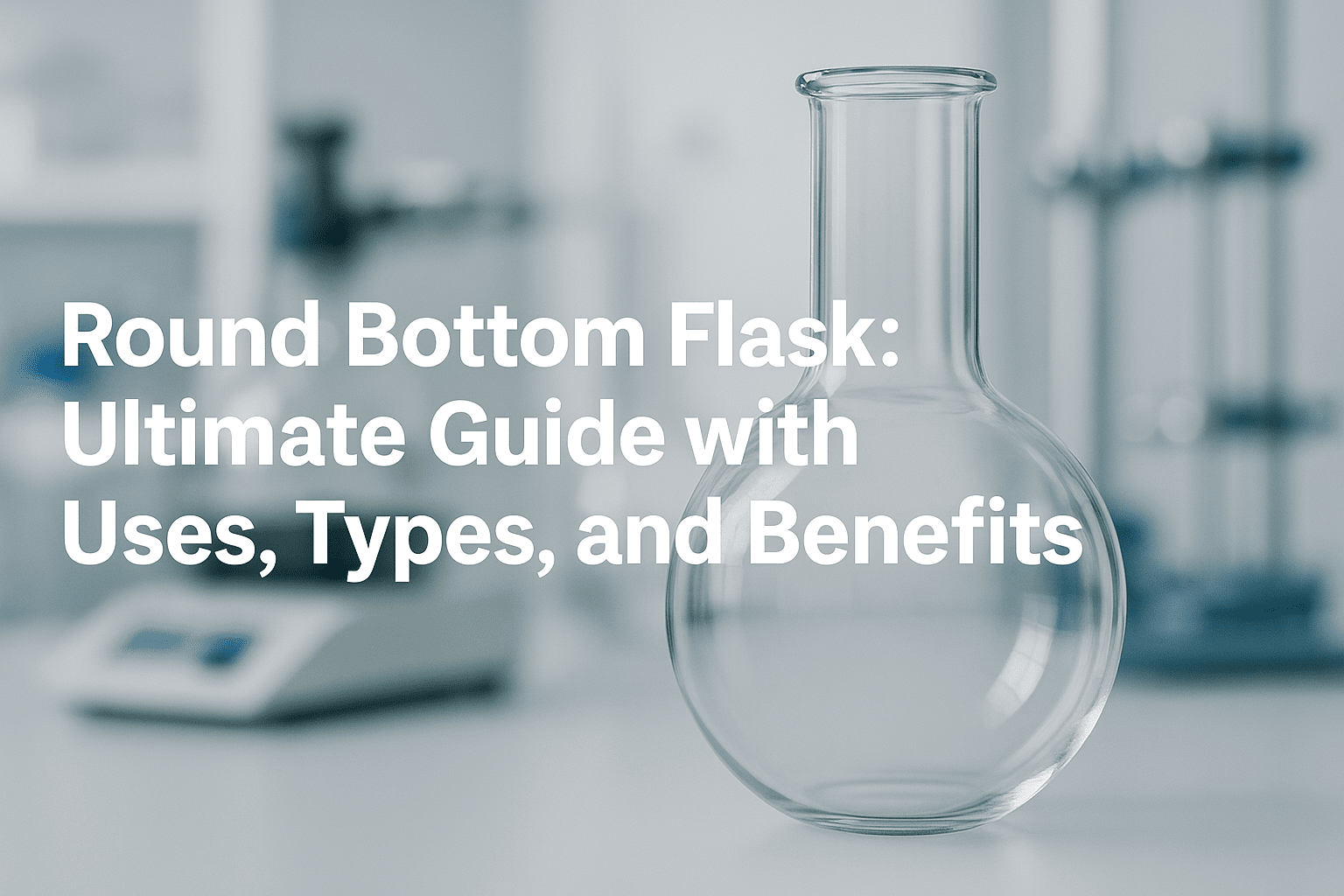
Introduction to Round Bottom Flask
A round bottom flask is one of the most widely used pieces of glassware in laboratories across the world. Characterized by its spherical base and narrow neck, this flask plays a crucial role in chemical experiments, distillations, heating, and storage. Its unique design isn’t just for aesthetics—it serves practical purposes that enhance safety and efficiency in scientific work.
Whether in a high school chemistry class or advanced pharmaceutical research, the round bottom flask is a trusted tool for scientists, educators, and researchers alike.
History and Evolution of Laboratory Glassware
Laboratory glassware has been around since the early days of alchemy. The round bottom flask, in particular, emerged as scientists realized the advantages of heating solutions evenly. Unlike flat-bottom containers, round bottom flasks reduce thermal stress, making them more resistant to cracking. Over time, glass manufacturers refined their designs, creating flasks with multiple necks and specialized attachments to meet the growing needs of modern science.
Structure and Design of Round Bottom Flask
Materials Used in Manufacturing
Most round bottom flasks are made from borosilicate glass, known for its ability to withstand high temperatures and sudden temperature changes. Some specialized flasks may also be made from quartz for higher thermal resistance.
Common Sizes and Capacities
Flasks are available in sizes ranging from 50 mL to 20,000 mL, allowing flexibility for both small-scale experiments and large-scale chemical production.
Why the Flask Has a Round Bottom
The round shape ensures even heat distribution, preventing localized overheating and reducing the risk of cracks. Additionally, the spherical design provides greater pressure resistance compared to flat-bottom alternatives.
Types of Round Bottom Flask
Single-Neck Flask
This is the most common type, typically used for simple boiling or reactions.
Two-Neck Flask
It allows the use of additional apparatus, such as condensers or thermometers, simultaneously.
Three-Neck Flask
Ideal for more complex reactions where multiple instruments need to be inserted without compromising the setup.
Specialty Flasks
Some designs include additional ports, vacuum connections, or reinforced necks for specialized applications.
Uses of Round Bottom Flask in Laboratories
Heating and Boiling Applications
The flask is commonly used for heating liquids over a Bunsen burner or hot plate due to its durability and resistance to high temperatures.
Distillation Processes
Round bottom flasks are essential in distillation setups, where they act as boiling flasks connected to condensers.
Chemical Reactions
Chemists use these flasks for reactions requiring reflux, as the design minimizes loss of material.
Storage and Mixing of Solutions
Some flasks also double as storage containers for chemical mixtures.
Advantages of Using a Round Bottom Flask
-
Even Heat Distribution: Reduces hotspots and allows uniform boiling.
-
Durability: Made from heat-resistant glass, making it long-lasting.
-
Versatility: Compatible with multiple scientific procedures, from heating to distillation.
Limitations and Safety Considerations
-
Fragile if dropped due to thin glass walls.
-
Requires a support ring or clamp since it can’t stand upright on its own.
-
Must be cleaned thoroughly after each experiment to avoid contamination.
Round Bottom Flask vs Flat Bottom Flask
| Feature | Round Bottom Flask | Flat Bottom Flask |
|---|---|---|
| Stability | Needs support | Can stand on its own |
| Heat Distribution | Even | Less even |
| Best Use | Distillation, heating | Storage, titration |
How to Clean and Maintain a Round Bottom Flask
-
Use bristle brushes for manual cleaning.
-
Apply specialized cleaning solutions for stubborn residues.
-
Rinse with distilled water and dry properly to prevent contamination.
Buying Guide: Choosing the Right Round Bottom Flask
Selecting the right round bottom flask involves assessing your specific laboratory requirements. Simson ChemTech provides a variety of options that cater to different needs. By considering factors like capacity, neck configuration, joint size, material, and wall thickness, you can choose a flask that ensures safety and efficiency in your experiments.
You can buy Round Bottom Flask from trusted manufacturers, suppliers, and exporters in India. For premium-quality Round Bottom Flask, Simson Chemtech is a leading manufacturer and supplier in India.
Future Innovations in Laboratory Glassware
As laboratories adopt automation and precision-based tools, round bottom flasks may soon integrate with smart sensors to monitor temperature, pressure, and chemical reactions in real time.
Conclusion
The round bottom flask is a cornerstone of laboratory glassware, known for its durability, versatility, and ability to handle high temperatures safely. From heating and distillation to storage and reaction setups, it remains a vital tool in both educational and professional labs. As science evolves, so will this timeless piece of glassware, ensuring it continues to support innovation and discovery.
FAQs about Round Bottom Flask
Q1: Why is a round bottom flask better for heating?
Because it distributes heat evenly, reducing the risk of thermal stress.
Q2: Can I use a round bottom flask without a support stand?
No, it requires a support ring or clamp since it cannot stand upright.
Q3: What is the difference between a single-neck and a three-neck flask?
A single-neck is used for simple tasks, while a three-neck allows multiple instruments to be attached simultaneously.
Q4: Are round bottom flasks microwave-safe?
Yes, if made from borosilicate glass, but always follow lab safety guidelines.
Q5: How should I clean a round bottom flask after strong chemical use?
Use appropriate solvents, followed by a neutralizing agent and thorough rinsing with distilled water.
Q6: Can I store chemicals in a round bottom flask long-term?
It’s not ideal for long-term storage; flat-bottom or specialized storage flasks are better.